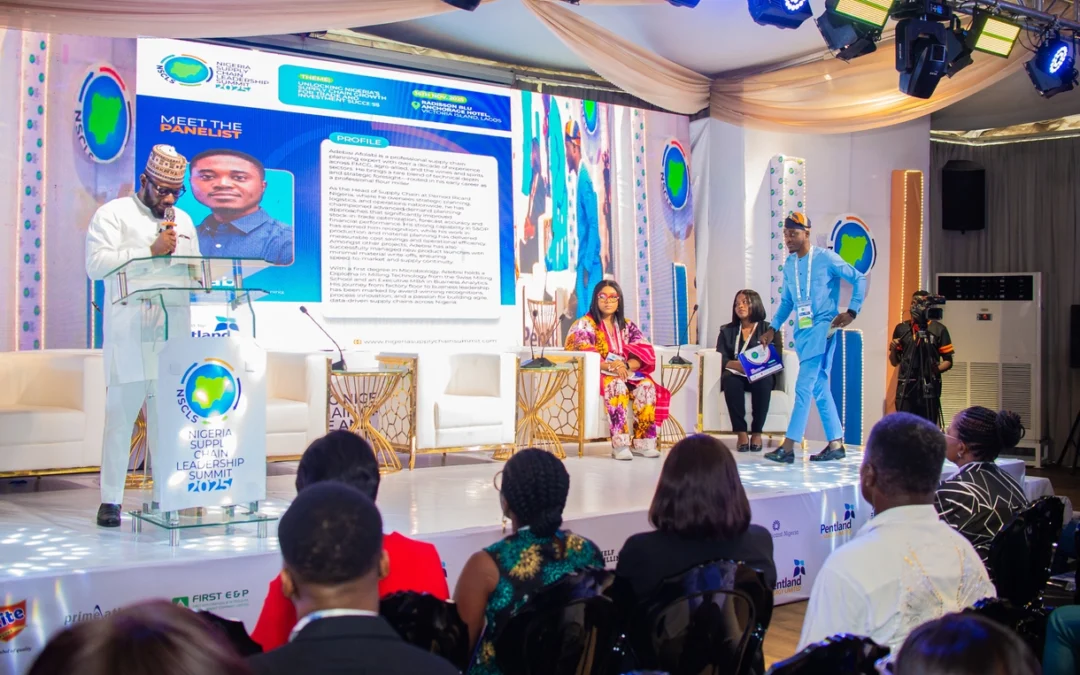
The Nigeria Supply Chain Leadership Summit (NSCLS) 2025 was held on 14 November 2025 at the Radisson Blu Anchorage Hotel, Victoria Island, Lagos, bringing together supply chain professionals, business leaders, policymakers, innovators and other stakeholders to examine how Nigeria can strengthen its supply chain ecosystem and unlock greater opportunities for trade and investment.
Following the inaugural 2024 edition, the 2025 summit focused on moving the conversation from supply-chain transformation toward growth, competitiveness, resilience and investment. Its central theme was “Unlocking Nigeria’s Supply Chain Growth for Trade and Investment Success.”
A major strand of the conversation was Nigeria’s role within the wider African supply-chain ecosystem. Coverage of the summit’s agenda identified regional trade, glocalisation/protectionism, innovation and local-content optimisation as important areas of discussion. The summit positioned stronger regional integration and more effective supply-chain systems as mechanisms for supporting sustainable economic development and diversification.
Key areas of discussion
1. Digital transformation and technology
The summit examined how technology and digital transformation can improve supply-chain visibility, efficiency and decision-making. An attendee’s post-event reflection specifically highlighted digital transformation as one of the major themes that stood out from the discussions.
2. Infrastructure and operational resilience
Infrastructure was another important area, particularly the systems required to make the movement of goods more efficient and resilient. The summit’s broader programme was designed around practical approaches to strengthening supply networks and improving operational efficiency.
3. Trade and investment
The summit connected supply-chain performance directly with Nigeria’s ability to attract investment and participate more effectively in intra-African and global trade. Regional integration and Nigeria’s position within Africa’s supply-chain ecosystem were specifically identified as areas for discussion.
4. Procurement, contracts and local content
The speaker lineup reflected a strong emphasis on procurement and commercial operations, particularly within Nigeria’s energy and industrial sectors. Discussions involving procurement strategy, contracts management, transparency, local content and operational performance formed part of the summit’s professional focus.
5. Energy and industrial supply chains
Energy and oil & gas were strongly represented among the summit’s contributors. Speakers included professionals from organisations such as NNPC Limited, Renaissance Africa Energy and Aradel Holdings, bringing perspectives on procurement, engineering, contracts, logistics and supply-chain transformation.
A gathering built around collaboration
NSCLS 2025 was designed to bring together the private sector, government and academia, creating a cross-sector platform for exchanging knowledge, developing leadership and discussing practical supply-chain challenges. The summit’s programme incorporated technical sessions, plenary discussions and sector-specific conversations.
The event was hosted and packaged by Pentland Energy Limited, which positioned NSCLS as part of its broader commitment to policy dialogue, innovation, investment promotion and capacity building within Nigeria’s logistics, procurement and supply-chain ecosystem.